Whose Education? The Future of Learning, Labour, and Living in the Age of AI
Introduction: Facing the Unknown in the Age of AI
The concept of “education” is reaching an unprecedented crossroads as generative artificial intelligence (AI) reshapes the way we learn, work, and live. Once, the primary purpose of formal learning was clear: equip students with foundational knowledge and skills required by the job market. Yet, as AI increasingly takes on tasks once reserved for humans—from reading lengthy books in seconds to writing essays and solving intricate math problems—the boundaries between what should be taught, how it should be taught, and why we teach at all are becoming blurred.
This post explores the critical question: Whose education? The future of learning, labour, and living in the age of AI. Drawing from in-depth conversations among leading education experts and the pivotal findings from recent scientific research, we offer a comprehensive, actionable look at how learners, parents, and educators can navigate these turbulent waters.
The Rationale and Purpose of Education in an AI-Driven World
For centuries, schooling has served a dual role: cultivating intellectual faculties and transmitting knowledge for employability. However, the swift ascent of AI now prompts us to reconsider both of these aims. As AI platforms can write essays, summarize texts, and solve academic problems—often better and faster than students themselves—the central question arises: If machines can perform the core cognitive tasks of schooling, what is left for humans to learn, and why?
- Traditional approaches are at risk: Test scores show fewer students reading at grade level, a trend sharply exacerbated by the COVID-19 pandemic. Now, with AI capable of performing reading, writing, and problem-solving tasks, previous markers of educational success lose their clarity.
- Intrinsic versus extrinsic aims: Education has long been split between instrumental goals (such as job preparation) and cultivating virtues like creativity, reflection, and appreciation for beauty. While the economy once demanded people to “act as machines,” now that machines can “act as people,” the transactional model of education—and its alignment with labour markets—is called into question.
Today more than ever, experts encourage a focus on developing flexible competencies: motivation, curiosity, adaptability, critical judgment, and the ability to continually learn. In an age of uncertainty, nurturing these capacities can serve students far beyond any single subject or career trajectory.
How Learning Is Changing: Engagement, Agency, and the New Role of AI
AI’s integration into education presents both unprecedented opportunities and significant risks. The central concern is not just “what” students learn, but how deeply and actively they are engaged in the learning process. Recent analysis of student engagement, based on years of research, reveals four modes of learning:
- Passenger Mode: Students coast through assignments with minimal engagement—often achieving grades but learning little. AI can make it easier to “check out,” as students rely on technology to complete tasks without true understanding.
- Achiever Mode: Students focus on perfect outcomes, sometimes at the expense of curiosity or creativity.
- Resistor Mode: Students avoid or disrupt the learning process, often out of frustration or disengagement.
- Explorer Mode: Students proactively dive into material that sparks their interest—engaging deeply, making connections, and generating original ideas.
AI can be a double-edged sword: while it risks amplifying disengagement for students in “passenger mode,” it can support high-achieving, intrinsically motivated “explorers” who use AI as a tool for research, creativity, or editing. The challenge—and opportunity—is designing learning environments that foster engagement and agency, rather than compliance and shortcuts.
Evidence-Based Insights: AI, Equity, and Global Education
A study conducted at UNESCO examined the challenges and prospects of education in the AI era. The research found that while AI offers tools to personalize learning and expand access—especially where resources are scarce—it also widens equity gaps where access to technology varies. Importantly, the study highlights the risk of “mechanizing” learning, cautioning against education models that focus narrowly on skill acquisition at the expense of social, emotional, and civic development. As the UNESCO study concludes, a holistic, human-centered approach—one that combines technological innovation with the cultivation of critical thinking, agency, and ethical understanding—is essential for preparing learners for an unpredictable future.
- AI can support under-resourced classrooms: For example, adaptive learning software and AI tutors have shown remarkable gains in literacy and numeracy for students with limited access to human teachers.
- But access and quality gaps persist: Disparities in language representation, technology availability, and teacher training can exacerbate social inequities.
- Guard rails are crucial: It is essential that AI products for education are designed with input from educators, child development experts, and communities—ensuring safety, legitimacy, and fair outcomes.
Practical Frameworks for Education in the AI Era
What, then, should 21st-century education look like? Rethinking teaching and learning in the age of AI means embracing both technology and timeless human faculties. Key strategies include:
- Fostering agency and engagement: Shift beyond grades to focus on how students reflect, pursue interests, connect knowledge, and take initiative in their learning journey.
- Pursuing meaningful personalization: Examples from U.S. school districts highlight the power of “studios”—student-designed projects guided by required learning standards. When students discover their “spark,” interest in school and other subjects often rises as well.
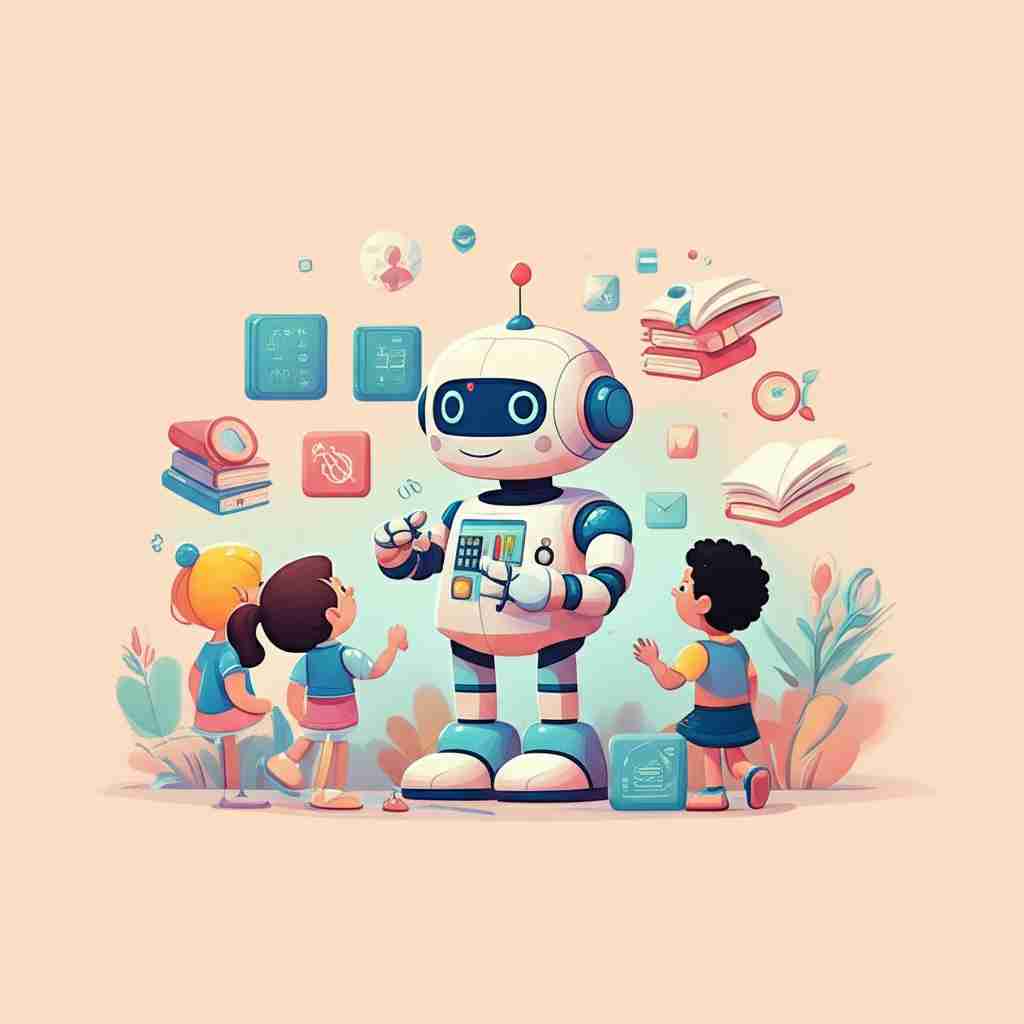
- Redefining the teacher’s role: In blended classrooms, AI can complement teachers by providing individualized tutoring, freeing up educators to support social-emotional development, collaboration, and critical thinking.
- Promoting human-centered education spaces: Some experts recommend screen-free periods for younger students, developing attention and reflection skills through deep reading and dialogue.
- Integrating AI literacy (with caution): As students mature, gradual introduction to AI tools—designed specifically for learners and not commercial exploitation—can ensure fluency, ethical understanding, and adaptability.
Actionable Takeaways for Educators and Parents:
- Prioritize feedback beyond grades; look for signs of agency, curiosity, and independent learning.
- Advocate for AI products developed in partnership with teachers and child development experts—not just for commercial gain.
- Maintain a balance: Offer opportunities for exploring AI, but preserve essential human development by protecting time for face-to-face interaction, deep work, and reflection.
- Support regulation and policies that ensure technology is safe, fair, and aligned with children’s long-term wellbeing.
The Path Forward: Preparing for an Unpredictable Future
We stand at a pivotal moment in the history of learning and labour. While we cannot fully predict what future jobs, technologies, or social structures will dominate in 15 or 20 years, we can prepare children to thrive by cultivating agency, adaptability, thoughtful use of technology, and deep human capacities. The markers of educational success must expand beyond grades and test scores to include engagement, initiative, empathy, and the ability to learn and re-learn in an ever-changing world.
Rather than succumbing to “fear of missing out” on the latest AI tools, families and schools are wise to apply technology thoughtfully, keeping students’ interests, development, and well-being at the center. In an era where both limitless information and new forms of automation abound, the future of education lies in nurturing the uniquely human qualities—motivation, curiosity, reflection, community—that no machine can replace.
For further reading and a deeper understanding of these dynamics, see the pivotal study on Whose education? The future of learning, labour, and living in the age of AI (UNESCO).
About Us
At AI Automation Brisbane, we believe in empowering people to adapt and thrive alongside emerging technologies. Just as education must now balance human skills and AI tools, we help local businesses harness smart automation while keeping people at the heart of every solution. Our affordable AI services support organizations in navigating change—making daily operations smoother and enabling more focus on curiosity, creativity, and growth.