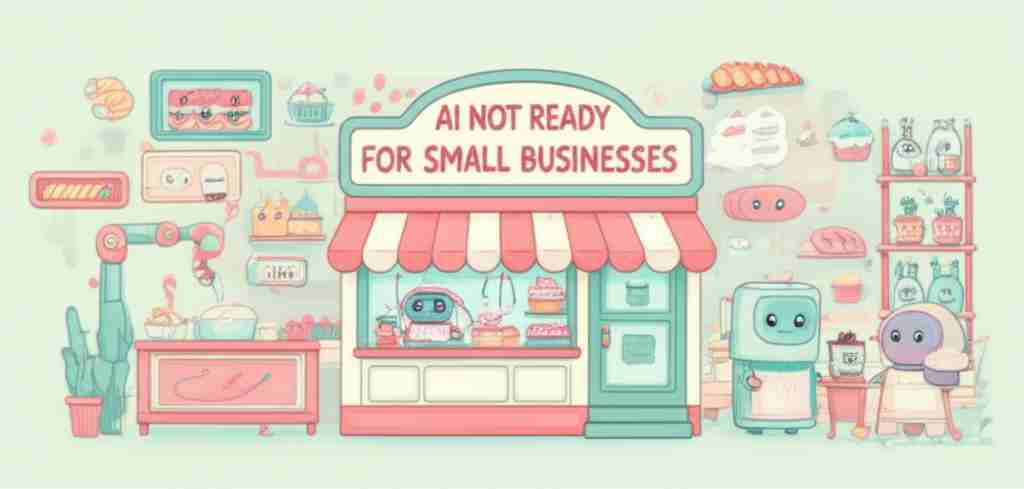
AI tools are revolutionising small business operations — but are we ready?
Artificial intelligence (AI) promises to dramatically change the way small businesses operate, automating tedious tasks, improving response times, and freeing up owners to focus on growth. But for every viral success story about “overnight” AI riches, there are untold stories of the practical challenges: legal regulations, skepticism, technical bottlenecks, and ever-limited budgets. Drawing on direct hands-on experience and emerging research, this post explores the real-world impact of AI on small enterprise—and asks the critical question: are small businesses, and those who support them, truly ready for the AI revolution?
1. How AI Tools are Transforming Small Business Operations
The allure of AI for small business is undeniable. From instantly replying to customer inquiries to offering predictive insights, today’s AI tools are lauded as game-changers:
- Rapid prototyping: Platforms like N8N allow for quick development and deployment, turning what once took months into a week-long process.
- Automated lead response: AI agents can read new inquiries and generate custom proposals, dramatically reducing the crucial “time to lead.”
- Workflow automation: By integrating with everyday tools (Gmail, Google Drive, calendars), AI systems automate manual tasks, cut errors, and ensure nothing falls through the cracks.
Automating these core processes should, in theory, allow small businesses to compete more effectively, scale their operations, and delight customers with rapid, responsive service. Yet the path from idea to implementation is rarely straightforward.
2. The Hidden Obstacles: Regulation, Privacy, and Practical Barriers
For all its promise, deploying AI in small business settings surfaces a surprising number of regulatory and logistical hurdles. Drawing from practical experience selling AI-driven solutions in the European Union, these hurdles include:
- Data privacy and compliance: In regions like the EU, data privacy laws (such as GDPR) regulate how personal information is processed, stored, and transmitted. For example, using AI tools hosted outside the EU—such as standard OpenAI APIs—may violate legal requirements if customer data is sent overseas.
- Legal responsibility: Providing managed AI solutions may turn a provider into a “data processor,” triggering the need for complex data processing agreements—a major burden, especially for consultants and small agencies.
- User consent and transparency: Customers must be informed (typically via website privacy policies and consent checkboxes) whenever their data is being processed by AI-driven tools—a step often overlooked, but legally required.
- Practical handover problems: Exchanging workflow credentials (e.g., setting up Gmail integration) can be time-consuming and may demand real-time collaboration to avoid sharing sensitive login data.
Even after overcoming legal challenges, further technical and emotional barriers may emerge, such as limited access to comprehensive industry contact data for outreach campaigns, or the anxiety of cold-calling potential clients.
3. Budget Constraints and Buy-in: The Small Business Dilemma
Perhaps the most overlooked barrier to AI adoption is the budget-conscious mindset typical of small business owners and early-stage founders. While AI solutions can be technically impressive, many small firms remain skeptical about their true value or simply cannot afford ongoing costs—particularly for perceived “nice-to-have,” rather than essential, features.
- Owners may resist even modest monthly fees for automation or AI hosting, comparing these to free (though perhaps less functional) alternatives.
- Sales conversations can quickly stall when pricing or the complexities of platform fees (e.g., for N8N or cloud hosting) are raised.
- The buyers most likely to respond to cold outreach—those operating on shoestring budgets—can become difficult clients, prone to micromanagement and resistant to fair compensation for technical effort.
Service providers must set realistic expectations: rapid prototyping may be possible, but monetising and scaling AI within the small business context often takes months, requires patience, and a laser focus on immediate, tangible results.
4. Research Insights: Are We Really Ready for the AI Revolution?
A study conducted at National World investigated the readiness of small businesses to adopt AI tools, confirming much of the direct experience described above. The study found that while AI-driven automated solutions offer clear potential to transform small business operations, significant challenges persist—especially around digital skill gaps, regulatory compliance, and cost sensitivities. Many small enterprises display enthusiasm in theory, but struggle to implement AI meaningfully due to the complexities of data protection legislation, limited technical support, and the perceived risk/benefit of investing in emerging technologies. The research concludes that for AI to truly revolutionise small business, support frameworks, clear guidance, and affordable, compliant tools must be put in place.
5. Practical Advice: Making AI Work for Small Businesses
Despite the obstacles, AI remains a powerful lever for small business innovation—if approached thoughtfully, with practical steps tailored to real constraints. To make AI work in your business, consider the following actionable advice:
- Start with the problem, not the technology. Don’t rush to implement AI for its own sake. Identify your most pressing pain points—like delayed response times or repetitive workflows—before seeking automation solutions.
- Prioritize compliance and transparency. If handling personal data, ensure your tools process information within your legal jurisdiction (e.g., use EU-hosted AI for European businesses), update privacy policies, and secure explicit user consent.
- Set realistic budget expectations. Cheap or free options may suffice for basic needs, but more robust AI solutions will require ongoing investment—factor this into your business planning.
- Test and iterate. Prototype quickly using modern workflow automation platforms, but be ready for an iterative, feedback-driven rollout and handover process with clients or internal stakeholders.
- Measure impact, not hype. Log data on usage and outcomes (while respecting privacy) to ensure your AI solutions are genuinely improving efficiency or revenue—not just ticking a technology box.
- Consider scalability and support. Choose solutions you (or your provider) can deploy, maintain, and support with the resources available. Avoid over-engineering: sometimes, a simple button beats an AI-powered chatbot for both cost and utility.
Conclusion: Embracing the AI Opportunity—With Eyes Wide Open
The advent of accessible AI tools is undeniably reshaping the small business landscape, offering novel ways to automate, optimize, and innovate. But the road from promise to impact is riddled with legal complexities, budget realities, and adoption hurdles that are all too easy to underestimate. Success lies in embracing the technology with humility: understanding the limitations, starting small, and seeking solutions grounded in business needs—not just technological novelty. With the right approach, AI can indeed help small businesses do more with less—provided we are truly ready.
About Us
At AI Automation Brisbane, we help small businesses harness the power of AI—navigating practical challenges like compliance, workflow automation, and limited budgets. Our solutions are tailored to your needs, making advanced technology approachable and effective so you can focus on growth, not admin.